Nations should be grateful for Britain’s role in civilising the world – and pay for it, says Rees-Mogg
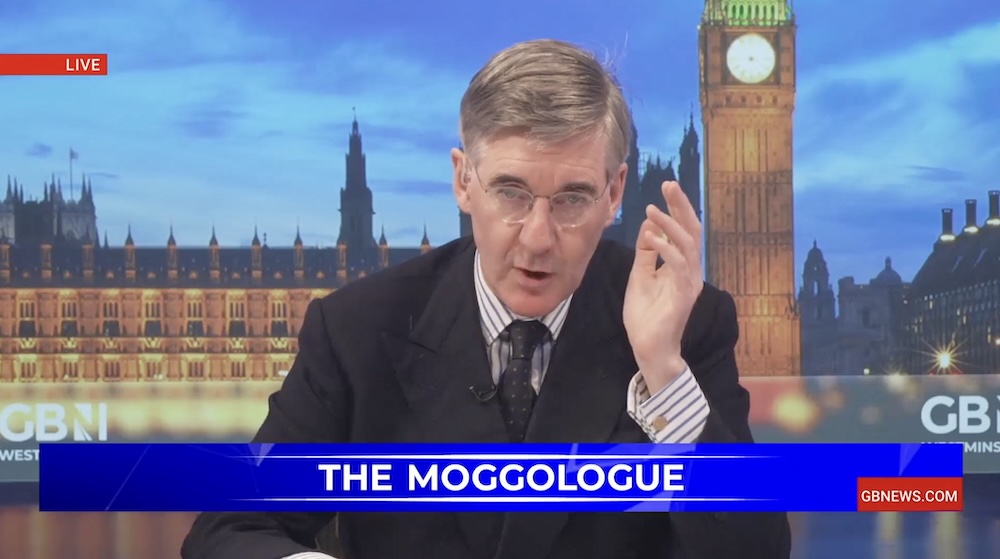
SIR Jacob Rees-Mogg has said that nations should be grateful to Britain for its role in civilising the world.
He said on GB News: “What has been going on in the United Nations and what has been the response of His Majesty’s government? Well, in the United Nations General Assembly, they have had a vote that says that we should pay reparations, and what do you think this bold, forthright, courageous government did, led by a man who only recently had his head in his hands in the House of Commons? It abstained, so the motion went through.
“And although the General Assembly, in a way, doesn’t matter, its votes aren’t binding. It’s symbolic, and it’s indicative of how weak this government is.
“Let’s be clear, there is no argument for reparations at all. First of all, it was the Royal Navy that put down the slave trade, the Royal Navy that stopped slavery across the globe. The United Kingdom was the first country of any significance to stop slavery.
“Denmark may have done it first, but Denmark had no ability to stop the slave trade. We did. We banned it across the whole of the British Empire in the 1830s whilst other countries, even our allies, were still trying to slave trade, and the slaves themselves were traded by their neighbours. They didn’t come into the system from us and from our iniquity.
“It was the British who brought it to an end, something actually, however evil it is, that has been part of human society since time immemorial, and now greedy nations are asking for more money from us, nations that should be grateful for what we did in our civilising role across the world.
“When we stopped awful things happening, we took the rule of law, we took democracy to nations. We took the common law, which has been so powerful in developing countries and increasing prosperity and we stopped the great evil of slavery.
“Not only should we not pay reparations, but we should be paid for the work that we did to make the world a more secure and a better one.
“And the United Nations vote is part of a slippery slope. You see this with the lunatic Chagos judgement that came from a United Nations court. It has and had no legal force, yet the government decided that it wanted to follow it nonetheless.
“So these motions, though technically unimportant, set a tone, set a way of thinking that then becomes more common and gathers momentum. It is utterly feeble that this government didn’t oppose it, but then it is an utterly feeble government.”