From 17% to 92%: Europe Faces a Wealth Creation Reckoning
In 1975, intangible assets represented 17% of the market value of companies in the S&P 500. By the end of 2025, that figure had reached approximately 92%, according to Ocean Tomo. Over 50 years, the market changed what it rewards. The next question is which businesses and economies will capture the value created over the next 50.
CFO, board adviser and author Matteo Turi calls this the Great Wealth Inversion. He argues that many businesses possess valuable knowledge, customer relationships, processes and intellectual property, yet leave them dependent on the founder rather than turning them into assets the business can own, scale and transfer.
“Europe has become highly skilled at preserving wealth,” says Turi. “The harder challenge is creating the next generation of it. A founder can generate excellent income for years and still reach retirement with little that can earn without them.”
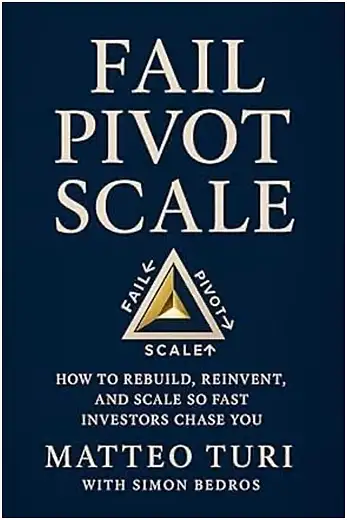
Turi’s new book, Fail. Pivot. Scale., addresses that challenge at company level. It examines why growth and profitability alone may fail to produce resilience, access to capital or lasting enterprise value. The book does not claim to forecast the world of 2075. Its practical question is more immediate: what is a business building today that will still have value when its founder steps away?
The assets hiding inside everyday work
A consultancy may solve the same problem hundreds of times without owning a repeatable method. A manufacturer may hold decades of technical knowledge that has never been codified. A service business may have loyal customers but no system for serving them beyond its current team.
“These companies may be successful,” says Turi. “But success that cannot be transferred is fragile. The wealth creation opportunity begins when a business identifies what it knows, codifies it, protects it and finds ways for it to earn repeatedly.”
That discipline underpins Turi’s High Valuation Code. Its five moves are to identify, codify, protect, commercialise and make transferable the assets already taking shape inside a business.
AI may accelerate the process, but Turi warns against mistaking automation for asset creation. “If a business has never defined its method or decided what it owns, making it faster will not solve the underlying problem. First create the asset. Then decide what technology can help it do.”
A question for the next 50 years
Goldman Sachs projects a substantial shift in the global economic order by 2075, including a larger role for Asian economies. Turi sees those projections as a backdrop to a decision facing European founders now: whether to rely principally on accumulated wealth and established industries, or build more businesses whose knowledge, systems and intellectual property can reach global markets.
“The 17% to 92% change describes the past. It is not a forecast for Europe,” says Turi. “But it should force a serious question. If value increasingly comes from what a company knows and can scale, how much of that value are our smaller businesses equipped to keep?”
Fail. Pivot. Scale. is written for founders, CFOs and business leaders confronting that question. Through case studies, financial frameworks and 26 interactive scorecards, it asks readers to diagnose what is failing, redesign what can work and build a business capable of creating value beyond the founder.